Introduction
Seeing a three-digit number on your credit report doesn't tell you much on its own. What actually matters is where that number sits within the broader cibil credit score range, and what that position genuinely means when you walk into a bank or apply online.
A 720 and a 780 might look similar at a glance, but they can lead to noticeably different interest rates and approval speeds. This guide breaks down every bracket within the range, what lenders actually think when they see your number, and what you can realistically do if you're sitting somewhere you'd rather not be.
Understanding the Full CIBIL Credit Score Range
Let's start with the basics, since a lot of people know their number but not what it actually signals to a lender.
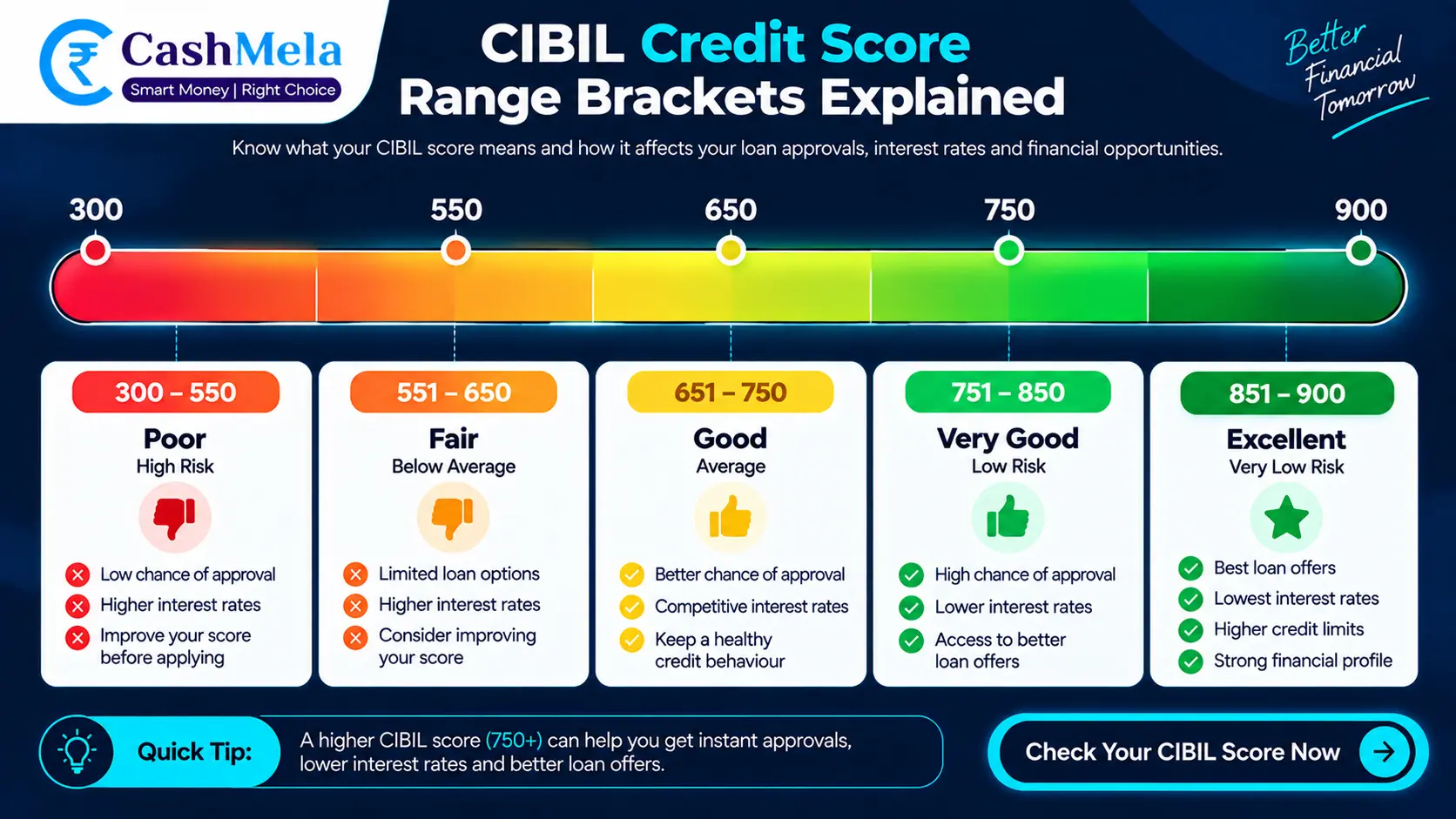
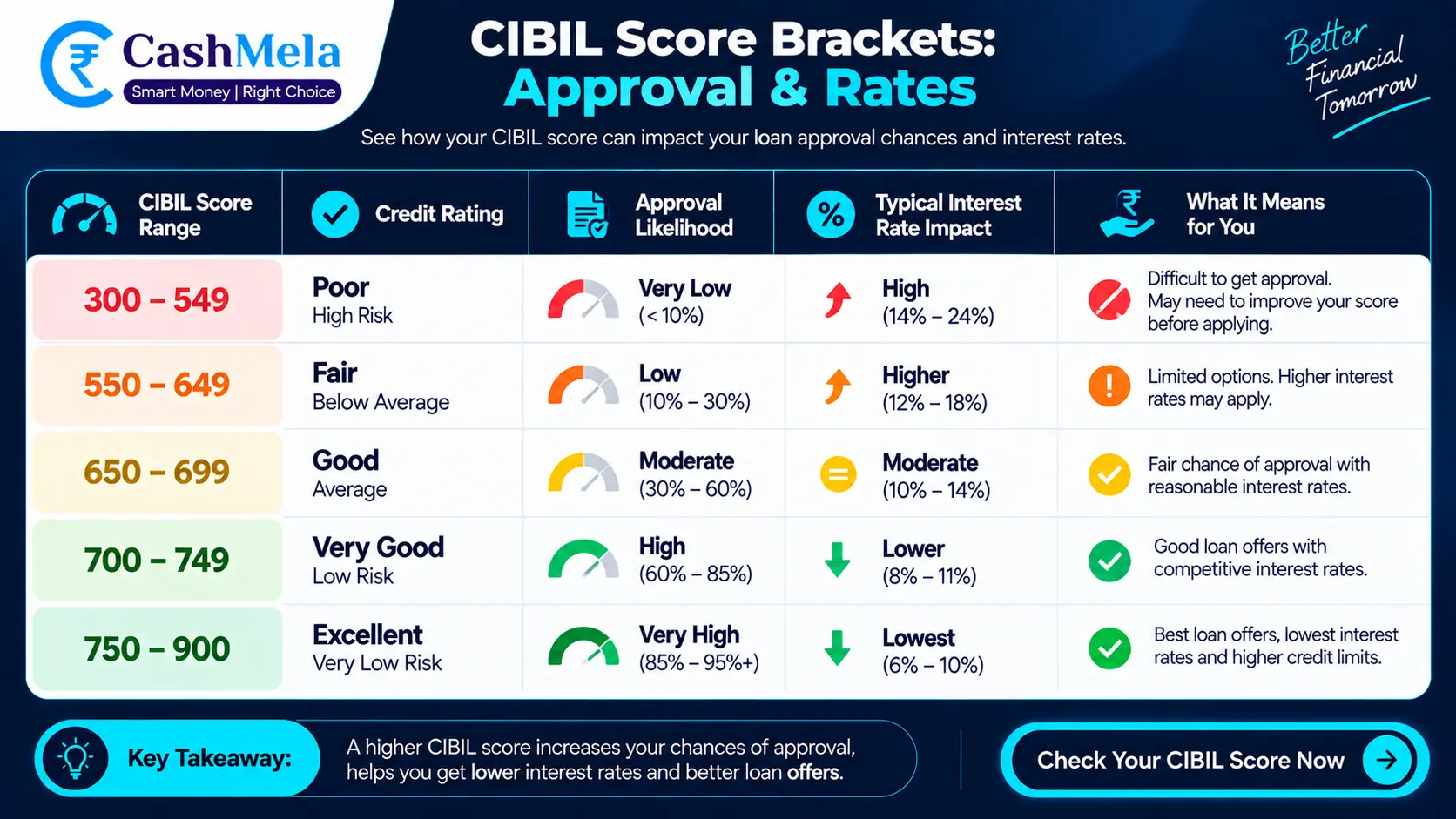
The Complete Breakdown
- 300 – 549 (Poor): High risk. Most unsecured credit (personal loans and credit cards) gets rejected outright at this level.
- 550 – 649 (Fair): Below average. Approval becomes possible through select NBFCs, but often with restrictive terms and steep interest rates.
- 650 – 699 (Reasonable / Average): Many lenders will consider your application, though standard rates apply with limited negotiation room.
- 700 – 749 (Good / Low Risk): Approval is generally smooth with competitive terms and favorable processing times.
- 750 – 900 (Excellent / Very Low Risk): The top of the cibil credit score range, unlocking the fastest approvals, highest limits, and sharpest interest rates.
Why Your Position in the CIBIL Credit Score Range Actually Matters
Is a 705 really that different from a 745? Genuinely, yes, and here's why that gap matters more than it seems on paper.
Take Rohan's story as an example. A logistics business owner in Nagpur, he applied for a business expansion loan with a score sitting at 708, comfortably inside the "good" bracket. He got approved, but at a noticeably higher rate than a competitor who'd applied with a 760. Both fell within ranges lenders consider acceptable, yet the pricing difference cost Rohan nearly ₹ 40,000 more in interest over the loan's tenure.
Where exactly you land within the cibil credit score range, not just which broad category you're in, genuinely shapes your final terms.
What Each Bracket Typically Means in Practice
| Range | Approval Likelihood | Typical Rate Impact | What It Means in Practice |
|---|---|---|---|
| 750 – 900 | Excellent (85% – 95%+) | Lowest rates (6% – 10%) | Instant approvals, highest limits, best loan offers |
| 700 – 749 | Good (60% – 85%) | Competitive rates (8% – 11%) | High approval odds, minor rate premium |
| 650 – 699 | Moderate to Good (30% – 60%) | Standard rates (10% – 14%) | Conditional approval, possible collateral or guarantor |
| 550 – 649 | Conditional (10% – 30%) | Higher rates (12% – 18%) | Limited options, strict lending criteria |
| 300 – 549 | Very Low (<10%) | High rates (14% – 24%+) | Rejection likely on unsecured credit; secured loans only |
Where Most People Actually Sit in the CIBIL Credit Score Range
Here's something worth knowing: most working adults with an active credit history don't sit at either extreme, they cluster somewhere in the middle, which is exactly why understanding the nuance within "good" and "fair" matters so much.
Common Reasons People Land Where They Do
- Inconsistent payment timing: Even a few days late repeatedly adds up and penalizes your payment track record.
- Elevated credit utilization: High card utilization dragging down an otherwise spotless payment history.
- Thin credit file: Not enough active loan history or vintage for the scoring algorithm to score you confidently.
- Recent hard inquiries: Multiple loan or credit card applications lodged in a short window indicating credit hunger.
It's worth pointing out that none of these factors are permanent sentences. Someone stuck in the 650–699 bracket for years, purely due to high utilization, can often shift up a full tier within a few months of disciplined repayment. No dramatic life change is required—just consistency applied to the two or three factors that actually carry the most weight.
How to Move Up the CIBIL Credit Score Range Over Time
Is meaningful improvement realistic, or is this mostly out of your hands? It's genuinely more within your control than most people assume.
Practical Steps That Actually Work
- Slash credit utilization below 30%: Bring credit card utilization below 30% of your total limit, and ideally closer to 10% if you can manage it.
- Automate payments: Set up auto-debit for every recurring EMI and credit card bill, since consistency matters more than any single large payment.
- Preserve your oldest accounts: Avoid closing your oldest credit card; length of credit history quietly supports your score more than people realize.
- Pace new applications: Space out fresh credit applications by several months rather than applying to multiple lenders back to back.

Frequently Asked Questions
Q1: What is considered a safe CIBIL credit score range for a home loan?
A: Generally 750 and above gets you the most competitive home loan rates, though many lenders will still approve applicants in the 700–749 bracket at slightly higher pricing.
Q2: Can two people with scores in the same bracket get different loan terms?
A: Yes, lenders look at more than just the bracket. Income, debt-to-income (DTI) ratio, employer profile, and employment stability all factor in alongside where you fall within the range.
Q3: How much does moving from one bracket to the next actually help?
A: It can meaningfully lower your interest rate and speed up approval, particularly when crossing from the 700–749 range into the 750–900 excellent bracket.
Q4: Is there a minimum CIBIL credit score range needed just to get any loan at all?
A: Most unsecured lenders look for at least 650, though secured loan options (like gold loans or loan against property) and specific NBFC products sometimes accept lower scores with adjusted terms.
Q5: Does the exact number matter, or just the broad bracket I fall into?
A: Both matter. The bracket gives lenders an immediate risk classification, but the exact number within that bracket can still influence the final interest rate and sanctioned loan amount.
Conclusion
Knowing exactly where you sit on the cibil credit score range, not just the broad label attached to it, genuinely changes how you approach your next loan or credit card application. Check your number, understand which bracket it falls into, and focus on the specific habits that would meaningfully push you into the next tier up. A little clarity here can translate into real savings the next time you borrow.
Ready to see what you qualify for? Check your eligibility and apply now for a loan or card that matches your credit profile.
Stay Informed, Stay Ahead!
Follow Cashmela on social media for more practical finance guides, loan tips, and the latest updates:
- 💰 Instagram: @cashmela_com – Simple finance tips and real borrower stories
- 👍 Facebook: Cashmela – Join the conversation and never miss an update
- 🐦 X: @cash_mela – Quick updates and finance news
- 💼 LinkedIn: Cashmela – Industry insights and company updates
✨ Let's make smarter borrowing simple, together!

Samarth Shigvan
Marketing Head & Growth LeadAuthor & Financial Analyst at CashMela.com
Samarth Shigvan is the Marketing Head at Cashmela.com. He oversees brand strategy, performance marketing, SEO, and borrower educational initiatives across India. Samarth is passionate about simplifying complex financial topics—such as CIBIL score optimization, interest rates comparison, and debt freedom strategies—into actionable, transparent guides for everyday consumers.